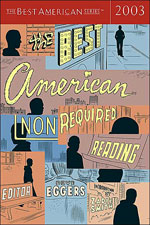
[Transcribed discussion of “Opportunity Knocks,” by Paul Reyes, published in Virginia Quarterly Review.
In this nonfiction investigation of the American housing market, the author follows Max Rameau, a self-appointed “home liberator” who leads a crusade in Miami’s Little Haiti to move homeless families into vacated houses. Usually the result of foreclosures, the abandoned houses are the property of the bank and therefore not legally habitable; yet Max and his followers believe that houses should not be sitting empty when the demand for housing is so high.
After a face-off at the site of a bank seizure between a displaced family, a bank liaison, and a throng of activists and journalists, emotions are mixed from parties involved: the displaced family is relieved but unnerved, Max is satisfied but unfulfilled, the police and the bank are resigned but watchful. The author raises questions about the non-intuitive, non-humanist way that banks manage vacated properties, but also raises questions about the efficacy of street-level, grassroots methods of addressing the problem.]
Michelle: It’s sometimes aggravating to read a piece of journalism that doesn’t follow a logical chain of events, but I felt that by using Max’s story as a foundation, this piece was a lot easier to follow.
Elise: Nothing ever loses points with me if it’s “not journalistic enough.” If it’s too fact-driven, too numbers-driven, I’m not going to get into it, but since we get to see what’s going on in Max’s head, I don’t mind it.
[The students were asked if the author chose an angle that kept their interest.]
Elizabeth: Abandoned houses have a certain natural appeal. The idea of a place that has been vacated and what happens after that is really interesting.
Elise: The first scene where Max and the author are scouting out abandoned houses was a good decision. By approaching the subject from the angle of a person who is passionate about his goal, I was more receptive to the larger story, the reality of the current housing situation.
Emma: I’d never heard of liberating houses; I thought it was an interesting angle to take. It was a good way to point out the flaws of the foreclosing process and the injustice experienced by certain families.
Adam: I thought the events on the last page were the most interesting part of the story. Even though he was worn out from his constant struggling with banks, Max had a vision, a hope, and we got to see that. I wanted to hear what would happen with Max and his houses after the story ended.
[The students were asked if they thought Max’s method of confronting the housing problem was effective.]
Elise: He went into that issue a little. The author spoke about how small of an effort this was, and that even with the community’s support they didn’t seem to have the sway needed to bring about change.
Michelle: There’s this point in the article where the narrator asks the question, “What’s the point?” None of the logic used by the parties involved makes sense. Max sees that, and that’s what he’s acting on.

Meeting 11/9/2009 (Michigan)
[Transcribed discussion of “Enquire Within Upon Everything,” by Richard Powers, published in The Paris Review.
This story is a hypothetical chronicle of a boy’s life in the shadow of the internet age. The protagonist, an unnamed boy, grows up in a time when social interactions are increasingly subsumed by rapidly advancing technologies. At first, many of the technologies the boy uses are familiar to us, but as the story progresses, the ways he exists and interacts with people become more synthetic and strange. Towards the end of his life, the boy ultimately becomes dependent upon his virtual life and social networks. The title of the story refers to a book published in 1856 that was meant to provide encyclopedic information on all aspects of civic life. The precursor to the World Wide Web, “ENQUIRE,” was reportedly named for this book.]
Stephanie: I thought it was cool that the protagonist didn’t have a name, like he could just be anybody. People can project themselves onto him, and that makes the story more real and more true.
Adam: By the end of the story, I had forgotten that it was one big conditional statement. It turns into a projection of how human life could be developing, and raises questions about what’s good or bad about these developments.
Barnaby: I don’t think this story really has anything to do with the future. I’m thinking about the part where the boy learns that another person lived exactly like he did, but one hundred and forty years earlier – it ends up being about the relationship between humankind and technology.
Elise: The ways that humans interact with technology, and the degree to which technology controls our lives – that’s an idea that really seems to interest people right now. This story articulates that concept really well.
[The students were asked to give their thoughts on the emotionless delivery of the story’s major events.]
Elise: He didn’t express emotions to the reader, but the story still evoked an emotional response. I wanted to know “What might he be thinking? What might he be doing?” I felt that he didn’t need to tell us how he felt because the wonder is what keeps readers engaged.
Rachel: I think the writing style works. It just gives us the facts, but that’s exactly what the Internet is – there’s no emotion, only facts.
Adam: When the boy’s son runs away, he describes the event with no emotion. To him, it was just another mechanical development. I thought that was interesting. He didn’t say that his son was disgruntled with technology or with his father – he just decided to leave, to drop off the grid, maybe simply to find out if it was possible.
This story is a hypothetical chronicle of a boy’s life in the shadow of the internet age. The protagonist, an unnamed boy, grows up in a time when social interactions are increasingly subsumed by rapidly advancing technologies. At first, many of the technologies the boy uses are familiar to us, but as the story progresses, the ways he exists and interacts with people become more synthetic and strange. Towards the end of his life, the boy ultimately becomes dependent upon his virtual life and social networks. The title of the story refers to a book published in 1856 that was meant to provide encyclopedic information on all aspects of civic life. The precursor to the World Wide Web, “ENQUIRE,” was reportedly named for this book.]
Stephanie: I thought it was cool that the protagonist didn’t have a name, like he could just be anybody. People can project themselves onto him, and that makes the story more real and more true.
Adam: By the end of the story, I had forgotten that it was one big conditional statement. It turns into a projection of how human life could be developing, and raises questions about what’s good or bad about these developments.
Barnaby: I don’t think this story really has anything to do with the future. I’m thinking about the part where the boy learns that another person lived exactly like he did, but one hundred and forty years earlier – it ends up being about the relationship between humankind and technology.
Elise: The ways that humans interact with technology, and the degree to which technology controls our lives – that’s an idea that really seems to interest people right now. This story articulates that concept really well.
[The students were asked to give their thoughts on the emotionless delivery of the story’s major events.]
Elise: He didn’t express emotions to the reader, but the story still evoked an emotional response. I wanted to know “What might he be thinking? What might he be doing?” I felt that he didn’t need to tell us how he felt because the wonder is what keeps readers engaged.
Rachel: I think the writing style works. It just gives us the facts, but that’s exactly what the Internet is – there’s no emotion, only facts.
Adam: When the boy’s son runs away, he describes the event with no emotion. To him, it was just another mechanical development. I thought that was interesting. He didn’t say that his son was disgruntled with technology or with his father – he just decided to leave, to drop off the grid, maybe simply to find out if it was possible.
Subscribe to:
Posts (Atom)